
With all the global high-street fashion brands taking mass-consumption to a whole new disturbing level, this Friday it was interesting to see the opposite of this ethos and have a look around the Trash Fashion Exhibit at the Science Museum. I find it inspiring to see that people still do care about the environment and are beginning to take-into consideration the effect that their consumption or production ultimately has on it. Maybe it is a cultural thing and has something to do with how and where I was brought up, but I still find it baffling when I hear that people are only just realizing the impact that their lifestyle choices have on the environment. Better late than never, I guess
One of the interesting ideas on display was a dress that had been made of ‘Ingeo’ which is a fiber made out of plastic(PLA) made from plants, like corn, wheat, sugar beet and sugar cane. Back home, I have seen corn-based compostable products used for food packaging and grocery bags but I never knew it was possible for it to be made into a fiber for textiles. What makes this fiber really amazing, is that it is a renewable resource, recyclable and is fully biodegradable but only within specific industrial composting facilities though. When describing PLA, they used a term I had never heard of before, called ‘closed-loop recycling.’ This means that PLA has an infinite life-cycle. It can technically be recycled forever, without creating off-waste.
I enjoy learning about new resources and technological advances, merging science and design, to create new fibers. What concerns me though, is whether, or not these new advances are really efficient, as far as the manufacturing processes, energy and water consumption used to create them.
It is hard not to consider these questions when being introduced to a new fiber like PLA because most people consider bamboo and other regenerated fibers to be sustainable or environmentally friendly; Whereas, the textile manufacturing processes used, hydrolysis alkanization and multiple bleaching, is very damaging to the environment and is a high risk health hazard.
Food for thought, really.

Another interesting textile development on display was that of Suzanne Lee, aptly titled Bio Couture. Lee, a senior researcher at Central Saint Martins College of Art and Design in London, has created a process for growing garments from bacteria culture. The method begins by growing a solution, consisting of green tea, sugar, bacteria and yeast. How it works, is that over the period of a couple weeks the ingredients naturally ferment and bond together, resulting in a thick gum like surface layer.
In the accompanying video at the exhibition, Lee demonstrates how she can only use the gum-like layer only when directly wet from the solution. In order for the garment to achieve its shape, Lee molds the wet layers onto a wood bodice and then leaves them to dry and take shape. The dried result resembles a resin-like cast.
Another interesting textile development on display was that of Suzanne Lee, aptly titled Bio Couture. Lee, a senior researcher at Central Saint Martins College of Art and Design in London, has created a process for growing garments from bacteria culture. The method begins by growing a solution, consisting of green tea, sugar, bacteria and yeast. How it works, is that over the period of a couple weeks the ingredients naturally ferment and bond together, resulting in a thick gum like surface layer.
In the accompanying video at the exhibition, Lee demonstrates how she can only use the gum-like layer only when directly wet from the solution. In order for the garment to achieve its shape, Lee molds the wet layers onto a wood bodice and then leaves them to dry and take shape. The dried result resembles a resin-like cast.
The process she has develop is quite interesting, melding the fields of both science and nature. What concerns me about this process though, is it’s practicality in the fashion world. It is a time consuming process. Once dry, the material is also very sensitive to water and if it comes into contact it will revert-back to its original gel-like state. Because of its malleable abilities and its transparent qualities, I really think Bio Couture would be better suited in another field; be it furniture, lighting or spacial design.
I think this is such an unique and fascinating development in the textile industry.

Sandy Black was another one of the participants at the exhibition. Black’s creation is that of producing bespoke knitwear, rendered from the client’s 3D body scan; thus reducing yarn wastage during production. Is this concept not similar to that of altering a hand knitting pattern with your own measurements, taken with a tape measurer? I understand the sustainable aspect of creating something new with minimal wastage but the idea falls short, in that, the sample garment on display is a loose fitting knit jumper. Was a lengthy computerized 3D body scan necessary, for calculating the measurements, to make a loose fitting knit? Would it not have been more effective to have illustrated the knit-to-fit idea with a more suitable silhouette, like that of a body-con knit dress?
Maybe, simply rename the concept, knit-to-wear?

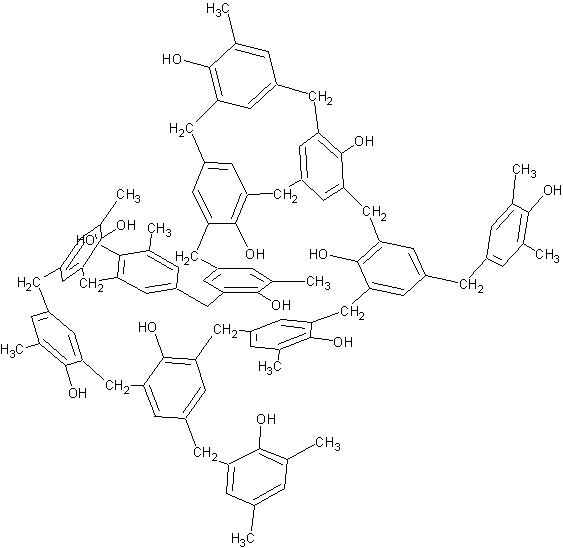
On another note, in the Challenge of Materials Gallery at the museum there are some really interesting things. Continuing on in the material and development theme, one of the objects on display was a pin tray made of Bakelite. Did you know Bakelite is recognized as the world’s first synthetic plastic? However, it is seldomly used today because of its costs and its complex production process. I have mixed feelings about this object. As much as it has brought upon a revolutionary change in the production of kitchenware, jewelry, radio and telephone casings; it is a plastic.
If Bakelite wasn’t invented, would we be where we are today? Would we have developed a method to recycle plastic like we know today?

No comments:
Post a Comment